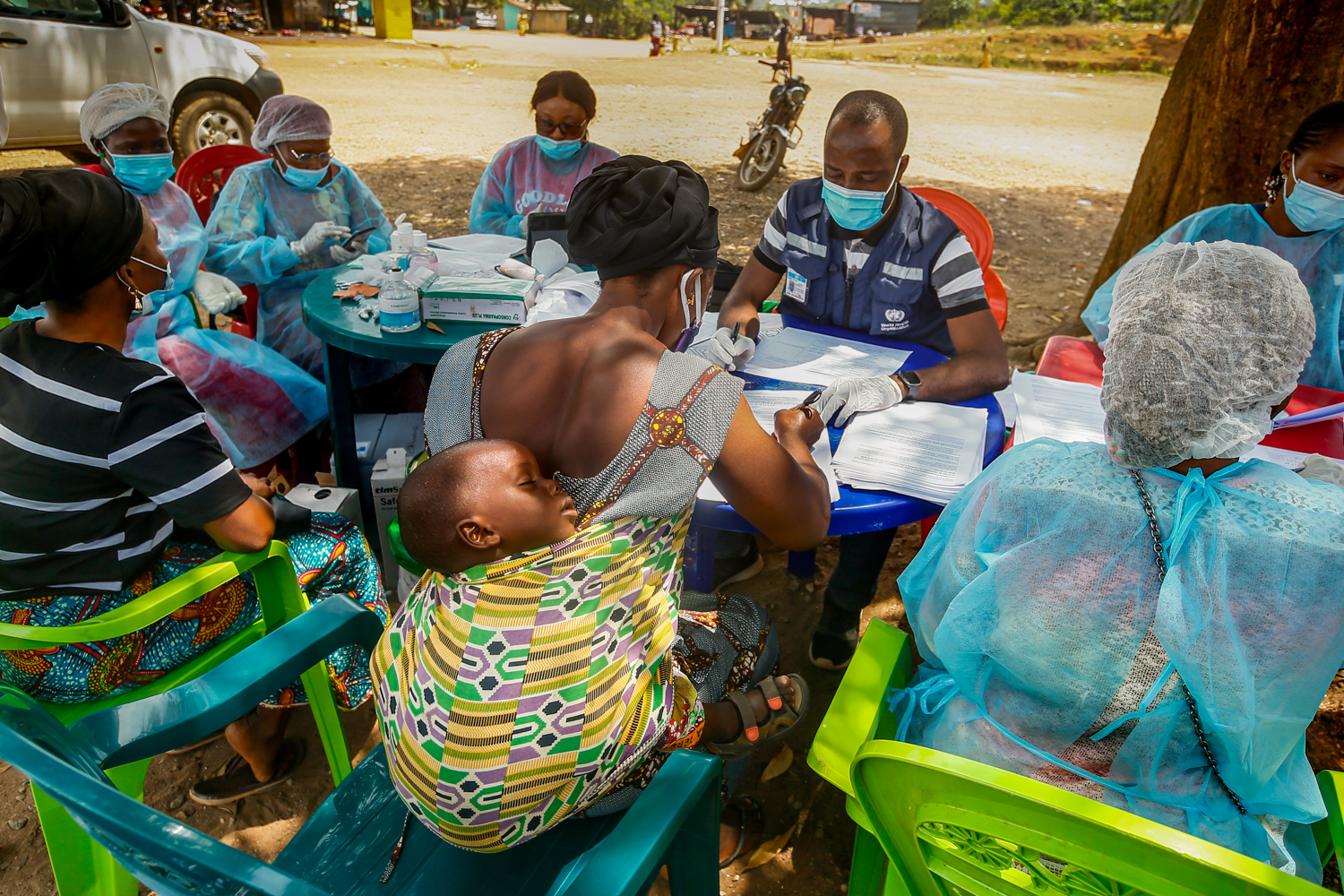
For more than 18 months now, the world has been facing the COVID-19 pandemic. In the African region, it is estimated that there have been 138,480 deaths and 5,705,446 cases according to the World Health Organization for Africa (WHO/AFRO) Covid-19 dashboard on cases and immunization, as of 10 September 2021. Simultaneously, several endemic diseases and epidemics continue to plague the African region. For example, the burden of cholera disease remains high with over 51,000 cases recorded in the WHO/AFRO Region in 2019, while " 348,000 preventable deaths " (Dr Mathshidiso Moeti Regional Director of WHO/AFRO) were caused by malaria in 2020. Finally, due to the humanitarian crisis in Madagascar, more than 300,000 children are suffering from malnutrition according to the WHO/AFRO Outbreaks and Emergencies Bulletin. Indeed, the region is currently managing 110 declared epidemics and about 14 humanitarian situations.
While Guinea declared the end of the Ebola epidemic on 19 June 2021, on 9 August 2021 the country reported its first case of the Marburg virus disease, for which there is currently no approved treatment or vaccine. Never reported in Guinea or even in West Africa, this virus, like Ebola, is associated with high case fatality rates.
Five days later, Côte d'Ivoire in turn declared a case of Ebola in its capital Abidjan, a first on the Ivorian soil since 1994. As a reminder, this disease had between 2014 and 2016 caused the death of 11,325 people in West Africa according to WHO.
Based on its experience with previous epidemics, WHO/AFRO, together with the health authorities in place, is acting to prevent the spread of the virus. This immediate response is characterized, for example, by the dispatch of 5,000 doses of Ebola virus vaccine, initially intended for Guinea, to Côte d'Ivoire so that vulnerable populations and health personnel can be protected. In Guinea, the dispatch of a team of experts from WHO/AFRO to provide technical support to the health authorities as well as several interventions such as community sensitization and screening were measures quickly taken.
In addition to the resurgent epidemics, several endemic diseases are still public health emergencies: malaria is one example.
According to the latest data on malaria in the African region from the integrated African Health Observatory (iAHO), it can be observed that "although mortality is decreasing over time, new malaria cases have been increasing since 2015." This factsheet on malaria states that in 2019, 67.2% of malaria-related deaths were of children under 5 years of age. Faced with this real socio-economic challenge, WHO has put in place a global technical strategy against malaria to guide countries where this endemic is rampant. It is also important to note that the initial results of the malaria vaccine being piloted in Kenya, Ghana and Malawi are encouraging. According to Dr Matshidiso Moeti, Regional Director of WHO/AFRO, this vaccine is a " promising additional tool in malaria prevention.”
Some countries, such as Cape Verde , have remained committed to malaria control despite the COVID-19. Indeed, the country continues to allocate significant human and financial resources in malaria control activities. Since 2018, no local malaria transmission has been recorded making Cape Verde eligible to submit its application for malaria elimination certification to WHO. According to Dr Tedros Adhanom Ghebreyesus, WHO Director-General, countries like Cape Verde, "have shown the world that malaria elimination is a viable goal for all countries."
However, the COVID-19 pandemic disrupted access to health services for malaria. According to data from national pulse survey on the continuity of essential health services during the COVID-19 pandemic, 36% of countries surveyed in the African region reported disruptions in malaria diagnosis and treatment services.
Another example of a latent endemic is tuberculosis (TB). Like malaria, TB continues to spread in the African region. According to iAHO’s latest data on TB, "since the beginning of the decade to 2019, 52 million people have been infected with TB bacteria and about 7.5 million people have died of TB." A further 79,200 deaths are expected by 2030, according to the factsheet. Indeed, the COVID-19 pandemic has led to a reduction in the number of TB patients using health services.
As highlighted by Dr Moeti, WHO Regional Director for Africa, on March 24, 2021 on the occasion of World TB Day, “the COVID-19 pandemic has compounded difficulties in accessing TB services". To this end, a policy brief developed by WHO/AFRO on the "effects of COVID-19 on tuberculosis healthcare service delivery" shows that due to containment measures, there has been a decline in patients visiting health services for fear of contracting the COVID-19 virus, as well as a decrease in testing. In addition, several TB treatment centres have been converted to COVID-19 isolation and management centres. The GeneXpert machines used for TB testing are also used for COVID-19 testing, resulting in a backlog of TB tests. In addition, funding for TB research, diagnosis and treatment has also been reduced to support COVID-19 pandemic programs.
In order to achieve TB eradication by 2030, a multisectoral approach is needed as "health determinants such as poverty, undernutrition, indoor pollution, tobacco use, and co-morbidities such as HIV continue to drive the TB epidemic in the African Region" (Dr Matshidiso Moeti, Regional Director of WHO/AFRO).
Finally, cholera also remains a danger in several African countries. As the disease spreads mainly when access to clean water is limited and closely linked to poor sanitation, cholera epidemics are currently underway in several countries in the region, including Kenya, Mozambique and Nigeria. However, despite the ongoing COVID-19 pandemic, oral cholera vaccination campaigns have been organised in countries such as in Ethiopia, Zambia and Nigeria.
Completely ending this endemic would require improved sanitation and hygiene conditions in the African region, especially in rural areas (cf. Infographic on SDG 6. Clean Water and Sanitation).
It is equally important to recall that several African countries are also currently facing major humanitarian crises. According to the Outbreaks and Emergencies Bulletin (week 32 - 02-08 August 2021) prepared by the WHO/AFRO Health Emergencies Programme, these countries include South Sudan, Mali, Madagascar, Cameroon, Burkina Faso, Nigeria and Ethiopia. These humanitarian crises, whether politically or environmentally induced, have a detrimental impact on the health of populations. A direct consequence for IDPs can be limited access to health care, living in precarious conditions exposing them to several infectious diseases (e.g.: Tigray region in Ethiopia, Cameroon, Nigeria or Burkina Faso). In other countries such as Madagascar, data show that "approximately 390,000 children are expected to suffer from moderate acute malnutrition and 111,000 from severe acute malnutrition as of May 2022". In South Sudan, the situation is equally worrying because of the threat of epidemics such as malaria or acute diarrhoea.
Despite the strain on public health systems in the face of Covid-19, it remains important that WHO/AFRO member states continue to maintain their efforts in the response to other health and humanitarian emergencies. It is therefore more important than ever that the resilience of health systems in the region is strengthened.